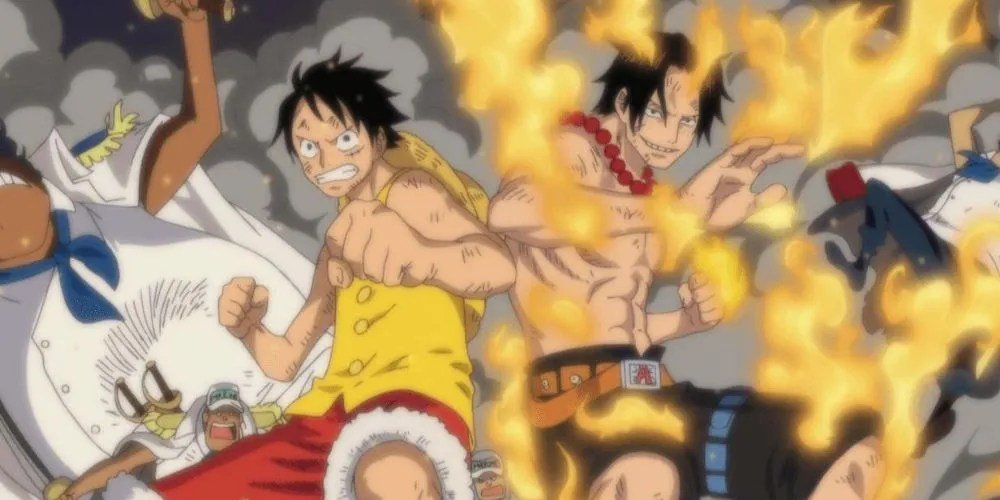
Imagine the boundless spirit of Monkey D. Luffy, the future Pirate King, suddenly dropped into the cutthroat, hyper-strategic world of Advanced Nurturing High School from Classroom of the Elite. It's a crossover that sparks endless debate and fascinating possibilities. At first glance, the two worlds couldn't be more different: one a grand adventure driven by dreams and freedom, the other a meticulously controlled social experiment steeped in manipulation and hidden agendas.
This flagship Super Pillar hub is your ultimate guide to exploring this incredible hypothetical scenario. We’ll delve into how Luffy's unyielding optimism, raw power, and unique moral compass would clash, converge, and utterly transform the intricate ecosystem of ANHS. Get ready to sail through the most thrilling "what if" in anime crossovers, as we break down every angle of Monkey D. Luffy's potential impact.
The Unstoppable Force Meets the Immovable System: Luffy's Core Philosophy in ANHS
Monkey D. Luffy, the protagonist of Eiichiro Oda's epic One Piece, is defined by his unwavering pursuit of freedom and his fierce loyalty to his friends. Raised with unorthodox training by his grandfather Monkey D. Garp and inspired by "Red-Hair" Shanks at a young age, Luffy’s motivations are deeply personal, centering on protecting those he cares about and experiencing endless adventures. He values directness, honesty, and a good fight, rarely resorting to manipulation or deception. This ideology is the very antithesis of Advanced Nurturing High School, where social standing, class points, and strategic machinations dictate survival.
In a system built on covert operations and psychological warfare, Luffy’s charismatic naïveté and transparent nature would initially seem like a fatal flaw. However, his unyielding optimism and resilience often serve as a foil to oppressive systems. He wouldn't care for climbing the ranks based on secret maneuvers but would instinctively challenge what he perceives as unfair or restrictive. To truly grasp the depth of this ideological clash, you'll want to explore how Luffy's unyielding personality would clash with the ANHS system. His direct approach to problems, whether physical or social, would force the school’s masterminds to confront a variable they simply cannot predict or control.
Luffy's defining trait, his absolute loyalty to his nakama (crewmates), would instantly set him apart in ANHS. Students in the school often prioritize individual gain or their class's advantage, even at the expense of others. Luffy, however, would prioritize the well-being and freedom of those he considers friends above all else, even if it meant sacrificing personal points or defying school rules. This natural inclination to protect and inspire would draw people to him, much like how he rapidly recruits allies in the Grand Line. To understand how such a bond-driven individual would operate in a world of calculated self-interest, you should delve into how Luffy would form unlikely alliances and build his own 'crew' within the cutthroat school environment. His genuine care and charisma, described by Dracule Mihawk as the "most dangerous ability in the world," would bypass the school's typical social barriers.
Beyond Academic Prowess: Luffy's Physical and Strategic Advantages (and Disadvantages)
While Luffy's academic performance would likely place him squarely in Class D, his other abilities are where he truly shines and where ANHS would face its biggest challenge. Luffy possesses a suite of powers that transcend anything known within the school's walls. His infamous Devil Fruit, the Hito Hito no Mi, Model: Nika (initially believed to be the Gomu Gomu no Mi), gives him a rubber body physiology, making him immune to blunt attacks and lightning. This allows him to stretch, bounce, inflate, and twist his body in impossible ways. His awakening, Gear 5, transforms him into the "Warrior of Liberation," Nika, granting him unimaginable freedom to fight however he imagines, even bestowing rubber properties to his environment or even lightning.
These powers would be completely unprecedented in ANHS. Imagine the chaos and confusion as Luffy defies physical limitations, turning the school environment into a cartoonish battlefield when pushed. Beyond his Devil Fruit, Luffy is one of the few individuals capable of using all three types of Haki: Supreme King (Conqueror's), Observation (Kenbunshoku), and Armament (Busoshoku), all with advanced applications. His Supreme King Haki could knock out masses of people, his Advanced Observation Haki allows him to see a short bit into the future, and his Advanced Armament Haki can destroy targets from the inside out. These are not merely combat abilities; they are tools that could grant him profound advantages in a high school setting. To fully grasp the implications of such power, you must discover how Luffy's extraordinary Devil Fruit powers and mastery of Haki would be perceived and utilized within the confines of ANHS.
Even without his Devil Fruit or Haki, Luffy possesses exceptional physical abilities honed through harsh training by his grandfather. He has immense strength, speed, agility, durability, and endurance, demonstrated by surviving Magellan's poison or fighting for 9 hours against Charlotte Katakuri. These physical attributes would make him a force to be reckoned with in any physical challenge the school could devise. The special exams, which often involve athleticism, teamwork, and resilience, would be completely upended by his participation. Whether it’s a race, a survival challenge, or a test of raw power, Luffy would likely dominate, perhaps even unintentionally. To truly appreciate the scale of his physical prowess in this unique setting, you need to examine how Luffy’s immense physical strength, speed, and endurance would give him an unfair advantage in the school’s notorious special exams. His gluttony, allowing him to rapidly heal by eating, and his uncanny combat instinct would only further complicate predictions about his performance.
Disrupting the Balance: Social Impact and Class Dynamics
Luffy’s presence in ANHS wouldn't just affect special exams; it would fundamentally disrupt the school’s carefully constructed social and hierarchical order. He wouldn't care for the intricate web of class points or the subtle power plays between leaders like Ayanokouji, Ryuuen, and Sakayanagi. Instead, he would act on instinct and his strong sense of justice, potentially dismantling existing alliances and revealing hidden agendas simply by being himself. His leadership style is not one of manipulation but of inspiration, attracting others through his genuine spirit and unwavering resolve.
This unique, freedom-driven leadership would challenge the very notion of what it means to be a "leader" within ANHS. He wouldn't scheme for Class A; he would simply ensure his friends are free and happy. His ultimate goal might not be to graduate in Class A, but to achieve a different kind of "freedom" for himself and those around him. To understand the profound shift he would instigate, uncover how Luffy’s unique, freedom-driven leadership style would completely shake up the existing class hierarchies and leadership structures. The seven powerful New World crews of the Straw Hat Grand Fleet, totaling 5640 people, didn't swear allegiance to him because of his cunning, but because of his infectious spirit and capacity to inspire.
The established characters of Classroom of the Elite would face their most unpredictable variable yet in Luffy. Ayanokouji Kiyotaka, the master manipulator, would find a student whose actions defy all logic and prediction models. Horikita Suzune's desire for an orderly path to Class A would be constantly challenged by Luffy's spontaneous outbursts and disregard for rules. Ryuuen Kakeru's bullying and strategic intimidation would likely bounce off Luffy like a rubber ball, perhaps even earning Ryuuen an unexpected "Jet Pistol" if he pushed too far. Even Sakayanagi Arisu, with her keen intellect and desire for pure competition, would struggle to calculate a competitor whose primary motivation isn't logic or points, but the pure pursuit of freedom. To gain insight into these fascinating character interactions, you'll want to find out how key characters like Ayanokouji, Horikita, and Ryuuen would react to Luffy’s unpredictable presence.
The Unforeseen Outcomes: What Does Luffy Mean for ANHS?
The question of Luffy's ultimate fate in Advanced Nurturing High School is perhaps the most compelling aspect of this crossover. Would his blatant disregard for rules, his poor academic performance, and his overwhelming strength lead to his swift expulsion? Or would his ability to inspire, his almost divine luck, and his sheer unpredictability force the school's administration, perhaps even Chairman Sakayanagi, to re-evaluate its entire system? Luffy isn't a pawn to be moved; he's a force of nature. He wouldn't just aim to graduate in Class A; he'd likely aim to break the very concept of class divisions if he saw them as oppressive to his friends.
His family lineage, being the grandson of the legendary Marine Monkey D. Garp and the son of the world's most wanted man, Monkey D. Dragon, hints at a deeper, inherent defiance against established systems. This background alone would mark him as a significant, albeit unwitting, threat to any controlling authority. His current status as one of the Four Emperors, commanding a bounty of 3,000,000,000, further underscores his capacity to shake the foundations of power. His ability to hear the "Voice of All Things" also adds a mysterious, almost destined quality to his character. To ponder the grand conclusion of this extraordinary clash, consider the ultimate outcome: would Luffy be expelled, or would he fundamentally change the very nature of Advanced Nurturing High School?. The implications are vast, promising either chaos or a revolutionary shift in the school's philosophy.
Luffy’s presence in Classroom of the Elite is more than just a fun thought experiment; it's a profound clash of ideologies. It highlights the power of freedom, loyalty, and unwavering dreams against a system built on control, manipulation, and pragmatic self-interest. His journey through ANHS wouldn't just be an adventure; it would be a revolution.